
Excitement and nervous energy flowed through my body as I hopped in a line of 50 salmon processors to begin day one of work. The line began at the plant entrance and stretched around a corner, down a few stairs, and ended near the door to the mess hall. The smell of eggs and bacon wafted out of the cafeteria as mosquitoes buzzed through the air. After a few minutes, we lurched forward.
Inside, a Leader Creek security guard was barking orders.
“Wash your hands! Grab an apron! Gear up! Let’s go!”
Work attire consisted of a hairnet, a beardnet (for those with facial hair longer than 1/4 of an inch, which I qualified for), a plastic poncho, latex gloves, safety glasses, and Leader Creek approved rubber boots. By the time I was “geared up,” my body was covered in plastic from the neck down.
After dipping my hands in a vat of sanitizer, I took a deep breath to calm my nerves, only to inhale a cold shot of moist, salmon-infused air. A light cough escaped my lungs. I walked with the other first-day-fillet-employees around a few corners as hip-hop music blasted on the plant’s speakers.
We entered the fillet room and I was immediately blown away by the size and scale of the operation. Five lengthy conveyor belts were suspended on a metal platform four feet above the concrete floor. Bits of fish littered the wet ground under the platform, as if a salmon bomb had been detonated in the massive, windowless room.
I was in a daze, distracted by the sights, sounds, and smells of the stimulating environment when a guy in his mid-20s wearing plastic orange overalls tapped me on the shoulder and motioned for me to follow him. We walked up five stairs onto the platform.
“Cut here,” he said as he pointed to a vacant spot next to the blue conveyor belt. He pulled a fillet knife with an eight-inch blade from a basket that was hanging over the belt and handed it to me without any direction. I looked at the knife, then at the salmon that were slowly approaching. Any training here? Do they just hand any schmuck in a smock a knife?
Thankfully, there was another cutter to my right. I watched him make two effortless cuts, one to the bottom of the fish, and one to an area where I reasoned the head used to be. I took another deep breath. A fillet lurched in front of me and I did my best to emulate what he had just done, though it was tough to hit the moving target. I made a sloppy cut and mangled the bottom third of the salmon. A second fish approached. I achieved the same result. Another lead stepped over and grabbed the knife out of my hand.
“Is this your first time cutting?” I nodded, resisting the urge to be a smart ass and ask him if it was the mangled fish or my blatant uneasiness that gave me away. I thought it best not to mention my phobia of fish.
“Truth be told, I’ve never held a salmon, let alone cut a fish. It’s my first day.” He nodded as a wry smile crept across his face.
“That’s pretty common for first season employees. Long, easy strokes, just like this.” He demonstrated on the next fish that moved by. “Just cut the belly and the collarbone,” he said. I watched his knife glide across the belt with ease. “Just try not to take too much meat.”
He handed the knife back to me. I butchered a few more fish before making several proper cuts. Wielding a knife would take some getting use to. I decided that if I managed to avoid cutting myself (or someone else), day one would be a success.
There was a break in the action after about an hour and I had an opportunity to look around and take in the surreal surroundings. About 50 people donning white, yellow, or blue aprons were crowded around two conveyor belts as hip hop music continued on the speakers. I could see my breath when I exhaled. Machine noise pierced the air. Black mats that covered the steel floor were soaked in ice-cold water that was running off the conveyor belts. An assortment of salmon scraps had collected around my feet and my apron was dripping water. Now I understood the rubber boots and ridiculous plastic poncho.
A half dozen department leads, all wearing orange suspenders, watched our every move. This didn’t feel like a summer adventure. It felt like I was working at knife-point in some post-apocalyptic world.
Hours were pretty light during the first week in Naknek. We worked six to eight hours days, which helped me get somewhat comfortable with the new work setting and the different jobs I’d be performing in the fillet department. I typically cut salmon, plucked pin bones, or loaded fish into the deboning machine. Regardless of the position, I was always hunched over a conveyor belt, completing some monotonous task.
By June 27th, peak season arrived. Tender boats delivered hundreds of thousands of pounds of salmon twice a day. The plant began operating on a 24-hour schedule, which meant 16-hour shifts for all workers.
My first full shift got off to a promising start. I entered the plant at 3:51 AM, donned my stylish blue poncho and beard net, and walked to the assembly line. I chose a spot picking bones. Classic rock was playing on the speakers. I plucked the early morning away as AC/DC and REO Speedwagon rocked the warehouse.
Creedence Clearwater Revival’s “Have You Ever Seen the Rain” came on. Half of the workers on five conveyor belts sung along to the chorus. The surprisingly beautiful moment gave me goosebumps. In retrospect, it was an early taste of some of the incredible camaraderie I would experience over the next month. A smile came across my face and I breathed a deep sigh of relief. Maybe this wouldn’t be so bad.
After the 15-minute morning break, I returned to work. The optimism I felt after a nice morning became a distant memory. I was asked to fillet fish for the next eight hours before I could return to the bone-picking line. By the end of my first 16-hour day, I had blisters on the thumb and pinkie of my cutting hand, which was also sore from the repetitive cutting motion. I had a tough time holding a fork at dinner that night without wincing in pain. Additionally, my back ached from being hunched over all day. I have never been a fan of taking Ibuprofen for soreness, but had no qualms about it in this scenario. I needed to utilize every tool at my disposal to make it through the long days.
After a few 16s, I fell into a simple routine. My usual shift started at 4 in the morning and ended at 8:30 in the evening. I discovered 3:07 was the perfect time for my alarm to jolt me awake. It gave me just enough time to pound some coffee (brought over from the mess hall the night before), brush my teeth, apply foot powder to my feet, get dressed, eat breakfast, and clock in 10 minutes early. Being on schedule for the first 43 minutes of the day became a fun game, if not a borderline obsession. If I was walking to breakfast any later than 3:32, I was running late.
Days were broken into four “quarters,” with a 15-minute break or lunch, coming after each segment. I focused on making it through four hours at a time. Each break served as the light at the end of a tunnel. Making it through four tunnels meant I completed another day. After the workday was over at 8:30, we had to be back on the line in a measly 7.5 hours. After factoring in dinner, a shower, and the morning routine, five hours of sleep (which was often a challenge due to snoring or coughing roommates) was the best case scenario.
After several days, I began to understand why Leader Creek ran the plant like a military installation. I wasn’t spending six weeks of my life in Alaska. I was spending it at “Salmon Boot Camp.”
In order for the plant to operate 24 hours a day without issue, everyone was expected to adhere to a strict schedule. No easy task for someone who is self-employed in the “real world.” Three security guards were tasked with enforcement. If someone failed to clock in for the start of a shift, a member of the security team would visit their room, bang on the door to wake them up, and usher them into work. Breaks were 15 minutes and not a second longer. Department leads would release us for our 15 and everyone would exit the plant in an orderly fashion. If people were dawdling at the conclusion of break time, a guard would walk through the mess hall or break room and yell “Fillet, fillet, break is over! Get back to work!” The plant ran like a well-oiled machine, not skipping a beat during breaks, meal-times, or shift changes.
There was a certain novelty to the experience during the infancy of my work contract. Everything in Naknek was different from my life back home. Although it was challenging and anxiety inducing, the change was refreshing. I was excited to get out of bed and put myself through the wringer. It was refreshing to let the rest of the world melt away. With limited internet access, spotty cell service, and long days, there was very little time to get involved in anything that didn’t involve salmon. I happily dropped off the face of the earth and immersed myself in the experience. I enjoyed it for a short time. Within a few days, the”honeymoon period” ended, challenges compounded, and I went into full on survival mode.
Despite a steady dose of ibuprofen, my back, feet, and hands regularly ached. Short nights of restless sleep started adding up and I was always tired. Unless I was taking a hot shower or was curled up in bed, I always felt cold. The weather in Naknek was typically overcast, drizzly, and chilly. Highs topped out in the 50s. It was even cooler in the plant. Ice cold water was constantly running over the salmon making their way down the conveyor belts, dropping the air temperature 10 degrees, and increasing humidity. You could always see your breath. The cold seemed to start at my feet (despite wool socks and boot liners) and travel throughout my body.
I caught the relentless “Naknek hack,” which made me feel even more miserable. The cough was everywhere. Coworkers on the assembly line, in the cafeteria, and in the dorm hallways were afflicted, too. For me, it never went away and always seemed to worsen at the most inopportune time – right when I laid down to go to bed. Cough suppressants were no match for the hack. Initially, the cough was coupled with sinus pressure and headaches. When those went away, congestion set in. A runny nose followed the congestion. By the time I stopped “draining” (as my mother would say), I picked up a sore throat. I was pretty well prepared with everything I packed, but I didn’t expect to need five weeks of medicine for my “whackamole cold.” I packed enough for 14 days. Thankfully, the onsite nurse had some extra to share.
Everyone battled some sort of cold ailment during their time at Leader Creek. After weeks of feeling like crap, I accepted I’d likely be sick for the duration of my stay. The cold, damp, work environment wasn’t conducive to feeling better. And getting more rest was out of the question. The only way to get time off work was to be actively throwing up on the line, have a high fever, or by catching pink eye. I avoided all those. Daily doses of cold medicine controlled the symptoms to some degree, but I never felt like a spring salmon during the work contract.
Going into the season, I was able to anticipate many of the challenges at Leader Creek. My solution was usually to grit my teeth, power through, and survive one day at a time. But as unexpected challenges surfaced, it became evident that strategy wouldn’t always work. Especially when techno music was involved.
I bellied up to the conveyor belt to begin another 16-hour day about a week into peak season. Techno was bumping on the speakers, and I despise techno music. By that morning, I had clocked over 100 hours in the previous seven days. Those 100 hours, along with restless nights and the cold working conditions, had taken their toll on my body.
My back ached more than normal, the “Naknek hack” was alive and well in my body, and dark, heavy bags hung underneath my bloodshot eyes. I looked like I was coming off a hellacious drinking bender, or I had lost a boxing match with a prize fighter the previous night and had the black eyes to prove it. All I could think about was my aching body, exhaustion, and that terrible techno noise some people call music.
I tried to turn my focus to the stream of salmon in front of me. I counted fish after each successful cut to distract myself. I started at one and tried to get to 100. I only got to 20 before the bump bump bump of the music drew my ire once more. I daydreamed about vacationing on a beach somewhere after the season. Visions of palm trees and sparkling blue water held my attention for a second before the music resumed its beating on my eardrums.
This is the wrong music for a processing plant. What happened to the classic rock? If we were in a club called the “Dancing Salmon” with strobe lights, scantily dressed women, and men in muscle shirts, I would have understood. Instead, 100 weary processors are crowded around conveyor belts, wearing UPS brown Xtra-Tuff rubber boots, latex gloves, hair nets, and colorful plastic ponchos. My head spun as I focused on everything that was wrong in that moment. This was a terrible dream I needed to wake up from.
This is exactly what you signed up for. This is exactly what you signed up for. While that was true, it didn’t change the fact I was stuck. I couldn’t escape that moment or my agitation with an hour-long walk. I couldn’t reach into my pocket and stroke my Alaskan calming stone. I couldn’t pick up the phone and talk it through with someone. After two hours of techno, I realized I was faced with a choice. I could continue to spin out and become increasingly aggravated by the music, or I could do something that would help. Desperate times call for desperate measures. I got the attention of a department lead and asked to use the bathroom.
There was a small restroom that stood alone next to a series of picnic tables outside the mess hall. The door faced away from the often busy eating area. To my pleasant surprise, not many people knew it was a single stall restroom. It looked more like a storage shed. 9 out of 10 times, it was vacant.
I made my way to the plant exit, tossing my latex gloves in the trash and rinsing the salmon off my apron on the way out. I quickly walked down the stairs to the restroom and locked myself inside.
I basked in the solitude of the quiet, peaceful, and impeccably clean bathroom. I shut my eyes, took a deep cleansing breath, and said “This techno shall pass,” “Breathe,” and “God help me.” Within moments, I felt rejuvenated. I looked at myself in the mirror and murmured a few more positive affirmations before returning to the plant. By the time I was back on the line, I was calm.
The DJ was still spinning techno, but it didn’t bother me after my trip to the “meditation spa.” I made it through another two hours (with techno playing the entire time) before morning break. I didn’t lose my mind (completely) or lash out at another person due to my frustrations. That wouldn’t be the last of the techno music, or moments of near break-downs, but it was a small triumph in a personally challenging moment. The DJ changed the music when we returned to work. Taylor Swift never sounded so good.
After “techno day” ended, I went for my usual evening constitutional. I sat next to the river and took in the peaceful surroundings. The silence was deafening compared to those four hours at the Dancing Salmon. I took a deep breath and closed my eyes. I flashed back to the moment I stepped away from the conveyor belt and sought out my makeshift meditation spa. I had survived that challenge, and the catalyst for making it through was taking action and creating a moment of calm. That beautiful moment in the bathroom (six words I never thought I would write) seemed to hold a deeper truth for something that was missing from this Alaskan experience – appreciation for small moments of peace and contentment. In an instant, my ultimate goal in Naknek shifted.
I didn’t just want to survive as a salmon processor. I wanted to find ways to be happy and content, despite all the things around me that made it an uncomfortable and challenging experience. I reasoned if I could find those things here, I could find them anywhere. Leader Creek presented an incredible opportunity to find joy, peace, and serenity in an unlikely place. But how? Maybe that moment of peace in the restroom held the key. It may have been simple and brief, but it had a powerful result.
I flashed back to the Creedence singalong on my first full day. I remembered my walks along the beautiful Naknek River, the Alaskan calming stone, and trips to the Bering Sea. I thought about the delicious salmon cakes I had eaten for lunch, and the coworkers I shared the meal with. I had already experienced some great moments in Naknek. They were just easy to forget when I was wrapped up in the challenges of the experience, or when my anxieties took over.
What else was I missing because I was so focused on surviving? I thought more about how I approached my time spent in the plant. I took my job so seriously, you would have thought I was performing open heart surgery all day. What if I tried to enjoy work, and made a point to engage more with my coworkers?
Surely, impactful moments were happening all around me, but I needed to take the time to see them, appreciate them, or create them. What if I started collecting those moments? Would it help me forget about the challenges? Was there a way I could actually be happy, serene, and content here, despite all the obstacles?
I snapped back to reality and remembered I needed to be back on the line in seven hours. I hadn’t even eaten dinner yet. But before I stood up, I took in the river for another minute, soaking up every peaceful moment. That was a great place to start.
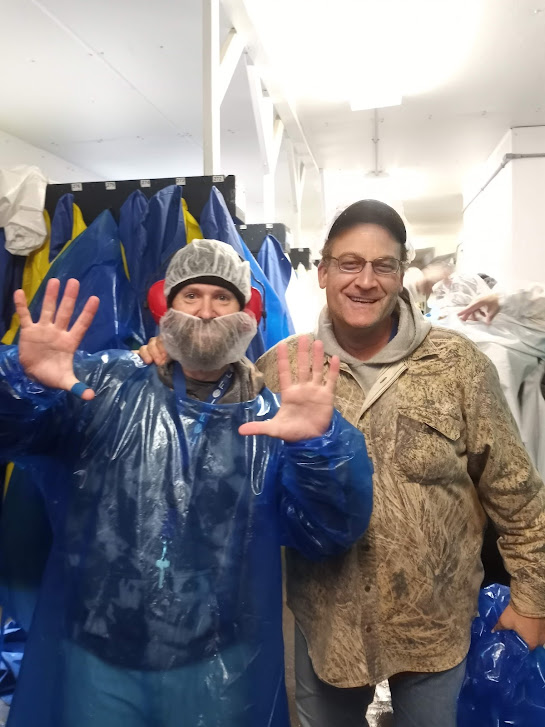
LCF uniforms. A matching bandaid. And 10 fingers! Pictured is my friend Red from Oklahoma.
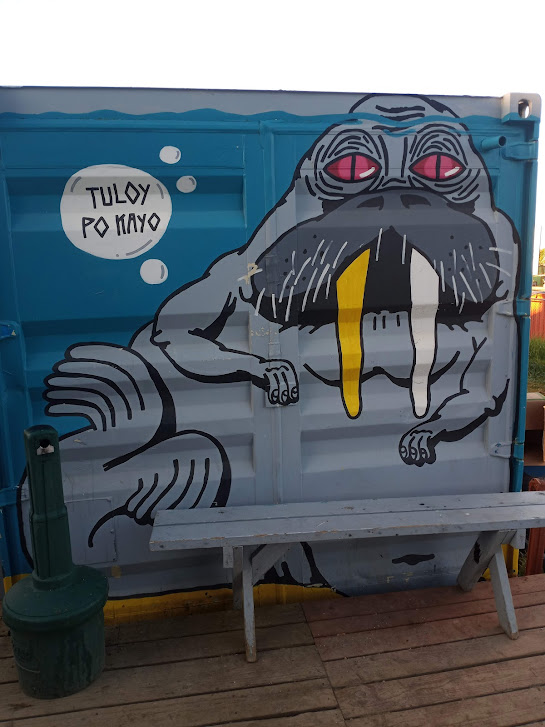
There were numerous murals around the Leader Creek campus, adding some splashes of color.
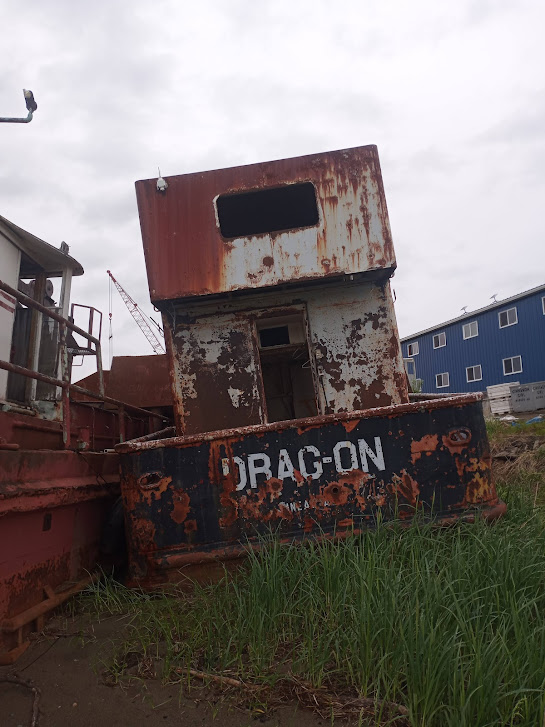
An appropriately named boat, I’d say!
 Ben Clagett
This is another AMAZING story!! And NOW I think I know a bit about what my son experienced 20 years ago haha! He absolutely hated the Techno music played there. Thanks for the beautifully written story Ben. Can’t wait to read more…..
LikeLiked by 1 person